Snooker Loopy and the Local Social Club

Updated: Aug 11, 2025
One of the consequences of digital technology, is the compression of time. Tasks that used to take hours or days to complete such as shopping, study or work, can now be done in a fraction of the time without even leaving your armchair. A side effect of such convenience is a decline in patience, and an increased expectation that things should happen almost instantaneously. You’ve probably witnessed someone order a pizza online, and then phone the vendor five minutes later asking where their order is. Perhaps you’ve done this yourself under the presumption that pizzas are made by pizza fairies who assemble your order rapidly just outside your house? But this lack of patience hasn’t always been so prevalent.
In the 1970s and 1980s, people wouldn't bat an eyelid sitting through a two or three-hour television programme. Those of you who ever watched repeats of epics such as Spartacus or The Ten Commandments, will remember the feeling of watching them begin at some point in the late morning, and not finishing until late afternoon just as the football results were coming in and you could check if you’d won the Pools. The modern practice of breaking long programmes down into five or six episodes with the option to 'binge watch' them in sequence is a clever ploy which wasn't necessary nor possible back then unless you had a video cassette recorder.
In the 1980s, second only to televised chess (The Master Game) and cricket, snooker was a sport which epitomised patience, particularly if you were watching Cliff Thorburn play Terry Griffiths. It was also a sport which reveled in old-fashioned values such as gentlemanly conduct, elegance and sportsmanship.
Crucial to the sport’s success was the achievement of nationwide colour television broadcasting in the UK in 1976. Prior to this, many would watch snooker in black and white, and unless you watched a frame from the beginning and had a photographic memory, it could become confusing very quickly. Some of you might remember commentator Ted Lowe’s famous guidance for those of us fortunate enough to have a portable black and white television in our bedrooms. "And for those of you who are watching in black and white, the pink is next to the green."
Another element which contributed to snooker’s early success was a lack of competition from technologies such as satellite television and the Internet. With only three or four terrestrial TV channels available, there wasn’t much competition from other sports. In the 80s there was plenty of space in programming schedules, but it would be a good decade or so before multi-million pound prize funds and sponsorship deals became available.

My clearest memories of snooker in the 1980s revolve around Alex ‘Hurricane’ Higgins. As a family, we were all interested in snooker. Part of the reason for this was because there was a social club at the end of our road with four full-sized tables, and back then, every middle-aged bloke held a pipe dream that one day, given enough practise, they'd become as good as Higgins. Terry Griffiths had managed to win the World Championship in 1979, and he was a postman who started off playing snooker part time. But the main barrier for many could-be-Griffiths' or Higgins’, was that social clubs had bars in them as well as snooker tables, and as the late, great darts player, Eric Bristow once commented: "You never beat the barman.” It’s important to remember that a pint of beer only cost about 60 or 70p in the early 80s, which inflation adjusted is only about £1.90 now. Poisons were cheap.
When snooker was on the television, it created a very relaxing atmosphere in our house. The main commentator at the time, Ted Lowe, had a very deep and hypnotic voice, and he didn't continually speak or find the need to fill dead space which is more common nowadays. This meant that for 20 or 30-minutes at a time, there would basically be silence in the room, with the occasional “Hmm” or, "He’s missed that on purpose" accusation from my dad or brother. There wasn’t much known about match fixing back then, but my dad was convinced that some players were purposefully missing shots, not because they had a dodgy bet on or anything like that, but rather to extend the game and to keep people from switching channels.
The main tournaments I recall were the World Championships, the UK Championships and something called the Mercantile Credit Classic. There was also the TV series, Pot Black, which is where I first learned about all the different players. The key ‘characters’ as they would become known, formed part of a kind of pantomime cast which would spearhead snooker's rise in popularity throughout the 1980s. Integral to this were various nicknames, which is a practice still continued to this day.
Alex ‘Hurricane’ Higgins...Party animal, drinker, smoker, bad boy, but naturally gifted.
Jimmy ‘Whirlwind’ White...Party animal, wide boy, Higgins’ apprentice with natural gift.
Kirk Stevens, ‘The Man in the White Suit’, and ‘The Grinder’, Cliff Thorburn...Canadian hustlers here to steal the trophies and titles from the English. So slow was Thorburn’s play sometimes, that when he played someone like Terry Griffiths, you could decorate an entire room in the time it took them to complete one frame.
Terry Griffiths ‘Griff’ and Ray Reardon ‘Dracula’...Steady Welshmen unafraid of the cocky English. Postman and Miner respectively.
Dennis Taylor ‘DT’...Comedian with genuine ability.
John Virgo ‘JV’ and Willie ‘Mr Maximum’ Thorne... Both good at one time, but quarter or semi-final prospects at best.
Then there was, Steve ‘The Nugget’ Davis, the pantomime villain epitomising what happens when you practise something more than anyone else, instead of getting drunk and enjoying yourself.
Every time Davis played one of my heroes like Higgins or White, my heart was with my heroes, but my logic knew, just knew, that Davis was on a completely different level. Every few years in all sports, there would appear one special competitor who would make a quantum leap into a category all of their own. They didn’t just win by the skin of their teeth, they annihilated the whole field, and they did so consistently. This was Steve Davis in the 1980s.
Pantomimes usually ended with the weak or humble characters winning the day and the audience loving them for it. But not with Davis. The natural flare and 'peoples champion' grit of Higgins and White were no match for the well-oiled, efficient and disciplined mechanics of The Nugget. His approach was arguably one of the earliest applications of Sports Science to what was otherwise just a popular pub game, and it was devastating.
The peak of the snooker pantomime came in 1985 following the Davis / Taylor black ball final. Promoter Barry Hearne had established the Matchroom Mob, and musicians Chas and Dave would go on to deliver the novelty track, Snooker Loopy the following year.

Now the Golden Era of snooker was inextricably linked with the local social clubs that were never more than a 10-minute walk away from most houses. These communal hubs originally had a political slant, and were often named after the two main parties, The Conservative Club or The Labour Club.
There was no need for Internet or social media back then. A couple of hours in one of these places and you'd be up to date on everyone's business (or a drunkard's version of everyone's business). The snooker players in these clubs were a mixture of all age ranges. The older ones would talk about Joe Davis, Terry Griffiths and Ray Reardon. The middle-aged would champion Higgins and White, and the younger ones would plug for Davis, Tony Knowles or Kirk Stevens. The average break in one of these smoke-filled cauldrons was between 20 and 30, and the whole room would go quiet if a player passed the mythical 40. The clubs also resonated with other televised sports programmes such as Bullseye, Pot Black, Grandstand and World of Sport, but the scene would be interrupted towards the end of the 80s when interest in politics waned, satellite television took off, and private buyers began to take over. This eventually led to women being encouraged to join what was for a long time a very male-dominated space, and this sparked strong debate.
The commonly held assumption was that women were happy with their husbands and partners socialising in a men-only venue, for the simple reason there were no other women in there. Critics of the change in membership policy argued that women being present changed the club dynamic and the conversation between the men. Whatever your position on this may be, the social club at the bottom of our road allowed both men and women to join, and for a good 10-years it was a wonderful venue which generated a lot of happy memories for me.
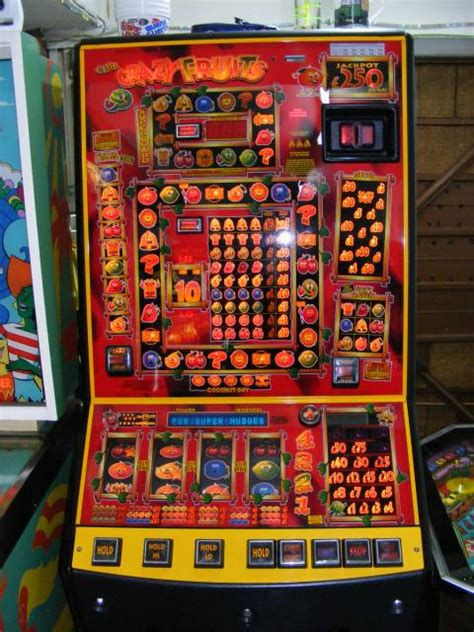
Similar to the Matchroom Mob, there were lots of different characters in the club and everyone sat in the same place each week, just like they did at the bar in the TV series, Cheers. The were karaoke nights, quiz nights, race nights and a range of snooker and darts tournaments. There was also a range of fruit machines which were only 5p or 10p per spin, unlike today's virtually unlimited stake machines.
Regardless of its slow pace, the quietude of the living room during a snooker semi-final or final of the world championship epitomised the simplicities of family life from a time not so long ago. It was no secret that television was the devil in the living room, but it's a very different experience everyone watching the same screen in the same room together, than it is everyone watching their own thing on different devices in different rooms.
What are your memories of the Snooker Loopy era?
Comments